Posts tonen met het label vermicompost. Alle posts tonen

zondag 4 augustus 2019

The WºRM: A home for nature in the city


Worm Hotel near Amsterdam Central Station used by Grandcafe 1884. 

Natural life in the Worm Hotel. 

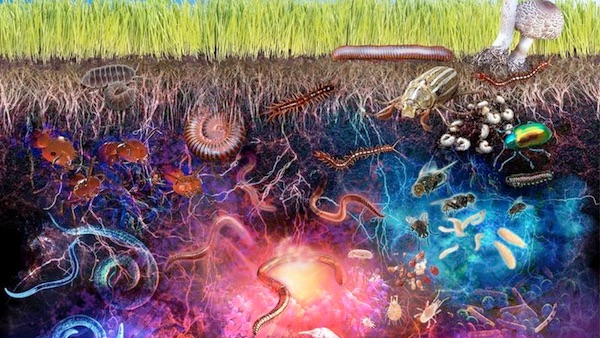
Inside the Worm Hotel ('Wormenhotel' in Dutch) something wonderful happens. Millions of organisms life together and transform what we consider as waste into healthy new soil: living soil. The leftovers from vegetables, fruit and other plant based materials are broken down and turned into humus.

In the worm hotel is room for many organisms. Composting worms play an important role, adding fertility to the compost with their 'wormenpoep' (vermi castings) that is full of beneficial micro organisms. The worms feed on the micro organisms and actually breed them inside their bodies. After digesting organic material containing micro organisms and excreting the castings the colony of bacteria and fungi will increase since the worms breed more then they digest.

Worms give their name to the worm hotel, but they certainly don't life in it on their own.

Woodlice (Pissebedden in Dutch) are also a common resident in the worm hotel. Woodlice are very important for the breaking down of dead wood and other organic material. Another benefit of woodlice in the worm hotel is that they change their skins when they grow. The woodlice have an exoskeleton. This hard shell does not grow when the animal grows so they have to change into a new skin when growing. The old shell is left behind and is broken down in the composting material.
Exoskeletons of insects and woodlice contain chitin. This compound can only be broken down by specific enzymes. The worms contain these enzymes in their digestive tract and increase the production of this enzyme when the digested material contains chitin. This enzyme will also be excreted with the worm castings.
I have been told that, when using vermicompost containing this enzyme it will make plants more resistent to attacks of plant eating insects. The plant will 'taste' of the enzyme and insects will leave the plants alone. If this is true I am not sure, I have not found a research yet stating this, but I am very curious about trying it out. In any case it sounds applaudable to me.

Foto Getty Images/ Istock photo.


Fruit flies are also a common (but less welcomed) guest in the worm hotels. When their numbers get too big, they can be quite a nuisance. However, they are also composting agents and help transform organic material into rich soil. The key is to look for a balance in moisture and feeding speed (amount of foodwaste fed to the worm hotel), to keep the population of fruit flies in check.

Spiders will join the worm hotel family at some point and will hunt on the flies and other small organisms. They play a role in keeping organisms in check.

Mites are small to very small organisms that also play an important role in the soil. In the worm hotel different kinds of mites can be found. The mites feed themselves with organic material, with springtales, larvae of insects or other mites and some even eat worms. The mites are important for healthy soil.
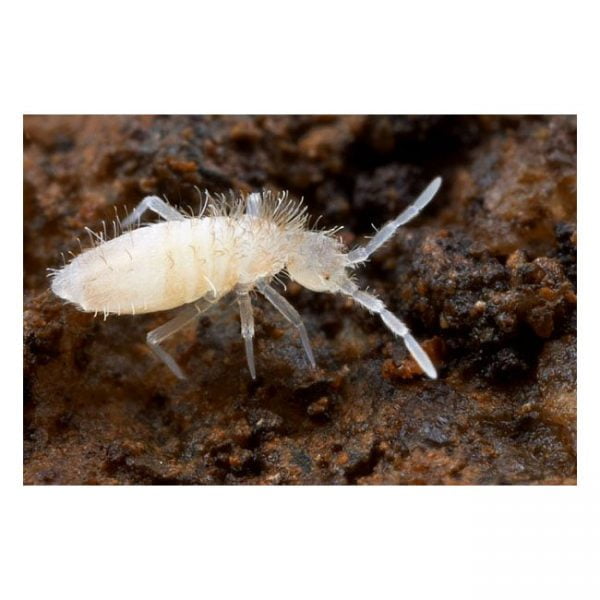
Springtail larvae.


Springtales are among the oldest animals around us. They can be found by the thousands in a square meter of soil. The larvae of springtales are a common resident and can easily be seen in the worm hotel. They are white oval shaped animals. Springtales digest organic material and help to create humus.

Ants are living on our planet in huge numbers. In number and even in total mass they outnumber us humans. Ants are helping your garden by cleaning it from dead organic matter and insects. But they can take over the worm hotel if they find it a cozy home. In general you do not wish for ants to nest in the worm hotel, and if you find a nest it might be a good idea to mix things around. I have not found proof that the ants harm the worms, but I can imagine they don't allow worms (and other organisms) in their nests and if the nest grows big there will be less space inside the worm hotel for the other residents.

There are many other organisms that can be found in the worm hotel and I belief that the more complex the eco-system is, the more alive the soil will be that is created.


Unbalanced system.

Whenever one organism finds an environment in which it can thrive it will florish. And this can result in a 'plague'.

For instance the fruit flies we mentioned earlier can multiply in such numbers that you are welcomed by clouds of flies that leave when the worm hotel is opened. Only to return to the inside of the furniture after some time.

Window in the worm hotel.


When your worm hotel eco system seems to be out of balance it helps to stop feeding the worm hotel for some time and add extra dry bedding material on top and nature do its tricks to rebalance the system. For instance, when too many fruit flies are in the worm hotel, there will be big numbers of fruit fly larvae. Organisms that feed on the larvae will start to grow in population and bring the number of fruit flies down.

We humans tend to look at 'a problem' and look for 'a solution' to 'fix it'. When we understand there is not one problem, but that it is part of a changing process with many players involved that work together (or against each other) to create a balanced eco-system, we can build understanding and appreciation for this process and use it to our mutual benefit.

I belief it is important that we learn again to life with nature and allow these moments of unbalance to occur for the eco system to grow stronger and more complex. It will imply that we ourselves will encounter some discomfort some moments and need to observe and learn what needs to be done to help the system to be more balanced. We need to work with nature, not against it, if we want to re-establish a more healthy way of living on this planet.


Still from our crowdfunding film from 2018.

Human nature

If you are reading this article my guess is that you consider yourself a human beeing. One single organism of the species Homo Sapiens. But if you look at yourself closely you will find that your body exists of many (uncountable) cells and organisms that have decide to work together and 'be' your body together. So already on an 'individual' level you are part of an eco-system. 

In the human world we tend to look at our environment for our own advantage or for things we need to protect ourselves from. Even now in a time of 'climate change' and potential world wide catastrophe the general concern is what 'harm' could happen to 'me' and 'us'. 

I belief that when we understand we are not apart from our environment, but that all is connected, and at some level really is all one, that we can start to make better choices then the selfish ones we make now. We need to care for all, as if it is for ourselves. 

That means giving space in our midst to plants and animals. Even if we think they are not profitable or directly beneficial to us. They are part of the whole and just as important. 

Words as 'plaque' or 'pests' and 'pest control' are words we need to abandon. Just as words like 'waste' and 'waste management' they hold us in a mindset that keeps us apart from our true nature. 


Worm hotel projects help reconnect with nature in the city.

I started designing worm hotels in 2012 because I wanted to learn myself about the natural cycles and help re-establish the connection with nature in the city. I am still learning and feel grateful for all the support I have been given by people all around the globe. 

At this moment I am looking for ways to share the experience I have been able to collect so more people can start using worm hotels and learn about healthy soil in the city. 

Over the past year I have been placing a number of worm hotels at restaurants and offices. It is great to see that also amongst food professionals the interest in reconnecting with nature is growing. 

Right now I am in Oslo start a first worm hotel pilot here in Norway together with Nabolagshager Oslo. 

If you like to learn about our worm hotels and see possibilities to start a project in your own town, please feel free to write us at: info@compostier.nl


Worm hotel in use by the office of Google Amsterdam.

Kitchenstaff from Google's office is happy to meet the new residents.

Our workshop at the KasKantine in Amsterdam.
On the front: wood from StadsHout Amsterdam.

Children take a look inside the worm hotel in The Hague.

Chef Rick from Restaurant As is using self made vermi compost
in the garden of As.


vrijdag 22 maart 2019

Het is lente! Tijd voor een mooie wormencompost oogst.

Oogsten van compost uit de WºRM op onze
 locatie bij de KasKantine


Oogsten van wormencompost uit de DHZ WºRM.


Vandaag heb ik mijn eerste wormencompost geoogst uit de DHZ WºRM. De WºRM is het model wormenhotel dat ik speciaal ontworpen heb voor mensen die graag zelf een wormenhotel bouwen voor thuis.

- Wil je zelf ook een WºRM bouwen? Lees dan hier hoe je jouw kopie van de Le Compostier handleiding bestelt. 


Houten Wormenhotel.

De WºRM is een compact houten compostmeubel met een klein tuintje bovenop. In het meubel is voldoende ruimte om al de rauwe groente- en fruitresten van een gemiddeld huishouden te composteren tot rijke vermicompost. De restjes worden bovenaan ingeworpen, als de tuinbak is weggeduwd. De compost kan aan de onderkant worden geoogst. 

Doordat de compost na enige maanden compacter wordt onderin het meubel, zullen de compostwormen naar boven migreren, waar het versere voedsel ingeworpen is. Wanneer je de compost onderuit het meubel oogst, zullen er dan ook niet veel wormen meekomen met de compost. Zo verstoor je het composteringsproces niet en kunnen de wormen rustig hun gangetje gaan. 


Premium compost: rijk aan bodemleven!

Wormencompost is super compost! Het barst van het leven en maakt je bodem blij. De vele micro-organismen in de wormencompost helpen de bodem weer helemaal vitaal te maken en zorgen ervoor dat de organische stoffen en mineralen in de bodem worden omgezet naar een vorm die de planten goed kunnen opnemen. 

Een gezonde bodem heeft een complex systeem van organismen die nauw samenwerken: Het Bodem Voedel Web (Lees hier meer over op de website van Marc Siepman). Door jouw eigen wormencompost te maken help je het bodemleven in jouw tuin of moestuin. Een gezond bodemleven zorgt er onder andere voor dat je minder water hoeft te geven aan je planten omdat vocht beter wordt vastgehouden. 
Andere voordelen zijn dat er minder plaagdieren en ziektes zullen zijn in de tuin, die je planten kunnen aanvallen. Een gezonde bodem maakt een gezonde tuin. 


Gebruik van jouw eigen gemaakte wormencompost.

Wanneer de compost klaar is voor gebruik is deze donker bruin van kleur, rijk zoet (bosgeur) en je kunt niet meer herkennen wat het geweest is. De compost die onderuit het wormenhotel komt kan (vooral bij de eerste oogst uit de DHZ WºRM) nog een beetje nat zijn. Laat deze dan nog enkele dagen 'rijpen' aan de lucht. Als de compost direct lekker rul is (vochtig maar wel korrelig, dus geen blubber) dan kun je deze direct gebruiken. 

Natuurlijk kun je de compost direct op de bodem gebruiken. Eventueel kan je de compost iets vermengen met de toplaag. Je hoeft niet diep te graven, beter niet zelfs, want dit verstoord het bodemleven, en dat willen we niet! Eventueel kun je de compost iets afdekken met een mulchlaag, zodat deze vochtig blijft en het bodemleven naar de compost toe komt. 

Ook kun je de compost gebruiken in plant gaten. Wanneer je nieuwe planten in je tuin plant, en een gat graaft voor de kluit van de plant, kun je op de bodem van het gat een handje wormencompost doen. Dit brengt direct het juiste bodemleven bij de wortels van de planten. 

Ook kun je er voor kiezen om een Actief Beluchtte Compostthee te maken met jouw rijpe wormencompost. De micro organismen die leven in de compost zitten aan de compostdeeltjes vast geplakt. Door de compost op te lossen in water en deze te beluchten met een aquariumpomp met beluchtingssteentjes, kun je de micro-organismen losweken van de deeltjes. Door een zoetstof op te lossen in het water geef je voeding aan de micro-organismen. In combinatie met het zuurstofrijke water groeit de populatie micro-organismen enorm snel. Na twee dagen heb je een super vloeistof die je kunt gebruiken om de bodem te beregenen, of die je op de planten (bladeren en stengels) kunt sproeien. 
Actief Beluchtte Compostthee maken: Door actief zuurstof toe te voegen
aan het water stimuleer je
de groei van nuttige micro organismen


dinsdag 30 oktober 2018

City Composting in a Worm Hotel.


Vermicompost harvested from the Worm Hotel of Restaurant As.

Compost on the menu.


One year ago we organised a succesfull crowdfunding campaign to start placing worm hotels at restaurants in the city. It had been a wish for us to build worm hotels for restaurants and the money we raised in the crowdfunding made it possible to build and place the first worm hotels at restaurants in the Amsterdam area (The Netherlands). 

Finishing all the worm hotels and the rewards for the backers of the crowdfuding has been a challenge, but now all - but one - are up and running and producing beautiful vermicompost to feed the gardens of the restaurants.


Crowdfunding Film of our succesful campaign.


Chef Rick (Restaurant As) feeds the garden with
self-made compost.

Circular Restaurants and Circular Office Buildings.


One of the proud users of a Le Compostier worm hotel is Rudolf Brands from the restaurant of Circl on the Zuidas. And also the restaurant of the Tropenhotel is composting their green waste to feed the vegetable gardens at the offices of KIT (Royal Institute of the Tropics). 

Its great to see that more and more restaurants and also offices are requesting worm hotels to start composting their own organic waste. 


Worm Hotel at KIT
Oosterpark - Amsterdam.

Worm Hotel at Circl
Zuidas - Amsterdam.


Worm Hotel at restaurant Bret.
Sloterdijk - Amsterdam


Harvesting the Vermicompost.


Last week we assisted the chefs of Restaurant As to harvest their own vermicompost. We harvested three wheelbarrows full of nicely screened compost. It continues to be a miracle to see how much material the worm hotels are digesting and transforming into the black gold vermicompost. The compost was than used by Rick and Cityplot members Helder and Susanne in the garden of Restaurant As. 


Cityplotmembers Helder and Susanne use the
Vermicompost to feed the soil of the garden at
Restaurant As.

Grow food in the City.


Cityplot is taking care of Restaurant As' garden for some years now and the kitchen uses the produce from this garden to make their dishes. The restaurant is using produce from local farmers next to the herbs and veggies that come from their own garden. 

Growing food locally in the city might become more and more important in the near future and to compost locally to feed the soils will help make this possible. 

Organisations like Cityplot organise workshops on how to grow food in the city, in communal gardens, on your balcony or even on your rooftop. 

It is also possible to grow food together in organised structures such as CSA's (Community Supported Agriculture). Amsterdam has now a few running CSA's that you can join to grow and buy your locally grown food. Cityplot runs Pluk! at the FruittuinvanWest. Another nice initiative is the Groente Amsterdammer from Kasper Hoex.

If you want to grow your own food on your balcony or in a community garden it would be great to make your own vermicompost. To do so you can make a Wormbucket, build a wooden DIY Worm Hotel or start a Community Composting project with your neighbours in your street.


Local Wood - Global Wood.


Wood from StadsHout.
The Le Compostier worm hotels are made out of FSC certified wood. But sometimes we get our wood from the city. Trees that are cut due to illness or restructuring of neighbourhoods are given to the foundation StadsHout (CityWood). StadsHout cuts the trees into boards and sells those to designers and manifacturers of furnitures. 

We are very happy to be able to use such a fine material as wood for our composting furnitures, and to be able to inspire lot's of people to start composting and to take care of the soil. But we also need to make sure we continue to grow back our forrests. 

That is why Le Compostier is now supporting Trees For All and will donate two trees for each new worm hotel that we build. One tree will be planted in the Netherlands and the other tree will be given to a treeplanting project in Bolivia. 


dinsdag 28 augustus 2018

Composting at the office.

Composting at Circl, at the feet of the headquarters of the
ABN AMRO bank in Amsterdam


The Office & the Worm Hotel.

Not too long ago it was common in the Netherlands to prepare your lunch at home and take some bread with slices of cheese to your office for your lunch break. 

Nowadays corporate buildings are housing professional kitchens with dedicated staff to offer fresh & healthy lunches, preferably using organic & local produce. 

It is also becoming more common to create green spaces near the office where people can sit and relax, have meetings outdoor, and even do some gardening to grow the lettuce and tomato's for their own lunches. 

These type of offices are now starting to discover the worm hotels as tools to make their company's kitchen a circular kitchen and use organic waste in a circular way.


Easy, clean and circular! 

Also in the middle of busy places like the financial district of Amsterdam at the Zuidas it is possible to compost organic waste. 


Urban Composter at Circl.
That is demonstrated by the Worm Hotel that Le Compostier build for Circl and that is in use by Circl's restaurant. The worm hotel is placed alongside the Gustav Mahlerplein and is covered with plants at the front and on top. A watergarden gives space to a lush green bouquet of waterplants.

People passing by hardly notice that inside the furniture millions of organisms are at work to make the finest compost available: vermicompost. Only when you open the windows on the sides of the composting furniture you discover what is happening inside; organic waste is turned into a valuable resource for Urban Greening.

The chef of Circl, Rudolf Brand, is taking great care of the workers in the worm hotel. He is showing great pride in the fact that the organic waste of the kitchen is not ending in the trash bin any longer and will be used to feed the herb garden of the restaurant.

Composting is not difficult, it actually is very easy! It does not smell and to be able to use the compost in the garden is very satisfying.


In this single Worm Hotel at
the Sloterdijk business area there
are more organism at work then there are 
people in all the office buildings
in the area together.

Huge workforce at work to make our City a Circular City! 


Did you know that in a teaspoon of healthy & alive compost there are more organisms then there are people living on the earth? Pretty impressive isn't?
And vermicompost is the most alive compost of all. 

When we would choose to invest in using our organic waste in a sustainable way we could do magic! There are so many places in our cities that could be producing food and give us the necessary green environment for healthy urban living, if only we would choose to start using our organic waste in a sustainable way and feed the soil! 

Luckily there a more and more places that choose to start composting the organic waste that they are producing. Offices and restaurants make compost in their own Worm Hotel and use the compost to feed the soil of their gardens.


Worm Hotel at café - restaurant Bret at
the business centre of Sloterdijk - Amsterdam.

Investing in a healthy future.


Right now things are up in our economies and it seems like the sky is the limit. Big building projects are realised and green spots in our cities are under pressure. The value of m2's are sky rocketing, but what is the value of a tree in the city? 

Cities like London are investing in their urban green and seem to understand that a city without enough green is doomed to suffer from health & social issues that are way more costly then reserving some space for trees & plants. 

The same counts for the way we treat organic waste. It seems cheap to discard it and burn or burry it in landfills. But if we do not start valuing it now we might end up paying a huge price: the loss of fertility of the soil.

If we wish to live abundant lives we need to understand we owe our wealth to the soil. 


Let's meet in the Garden!


At the KIT (Royal Institute for the Tropics) in Amsterdam many small and big companies are sharing the monumental building as an office space. Many of these companies are working on sustainability issues and each has its own niche focus.

Just a while ago, on initiative of De Gezonde Stad (one of the organisations that is housing at KIT) a vegetable garden was realised at the location. People of different organisations are taking care of their own part of the garden and grow some food while relaxing AND meet each other. In that way these companies can meet each other, grow stronger networks and have a bigger impact together.  

To make the location more circular Le Compostier was asked to build a big Worm Hotel to turn the food waste of the Tropen Hotel into a rich compost and to be used to feed the garden soil. 


Watergarden on top of the Worm Hotel at
the headquarters of Insurance company
Zorg & Zekerheid. 


Make your Office a Circular Office! 


Do you wish to start composting at your office building? We make it possible! 

You don't need to have a lot of space available. We design custom made solutions for your location & help make the transition to a circular use of organic waste. 

If you wish to get more information about Le Compostier and the Worm Hotels or get a free quote for your office please send us an email! 


Worms at Work! 


donderdag 28 juni 2018

Composting at the heart of the financial district of Amsterdam

Soil is precious. 


Fully circular at Circl: composting in a worm hotel & making healthy soil for the city.


Worms are the bankers of the soil, they turn green waste into gold: Black Gold. 


You would not expect it in a place like the Gustof Mahlerplein at the heart of the financial district of Amsterdam; a furniture in which composting worms live and turn green waste into rich vermicompost. But since last Thursday the restaurant of Circl is using a worm hotel to make compost out of their organic waste. In between huge concrete buildings and tiled squares there is now a small wooden furniture that is turning green waste into rich soil. And that is great, because we need a lot more healthy soil if we want to be able to keep growing food to feed the growing population of cities. 


Wormenhotel for Circl in construction at
my workshop.


Green spots in a concrete world.


Cities are growing. All over the world you see mega cities appearing and more than half of the human population is choosing to live in an unnatural environment: cities. Cities are great for the things they offer to us humans: fun, work, networks for careers, etc. But they are not offering a lot of nature. 

Academic studies are showing that it is important for human wellbeing to be close to nature. When humans are able to spend time in nature and in connection with green they feel better, are happier and more healthy. It seems very wise then to appreciate the green spots we have in the city and preserve them well. Why spend millions on old paintings and not do the same to keep some nature close at hand?

All to often nature is sacrificed in urban settings to allow for more real estate development and short term profits. But there is a growing awareness that we need to keep the green we have & invest in more green in the city. It is great that a bank like the ABN AMRO is investing in a circular economy & shows to value nature in such a way. By building their circular pavilion the bank is giving circular thinking a platform. Nature is our greatest teacher in circularity. Nothing in nature is considered to be waste. The waste of one organism is the food/ building material/ home/ etc, for the next. 


Living systems.


Opening of a worm hotel in a neighbourhood of Amstelveen.
Green makes a city livable. Green offers relaxation. Green offers a place to calm down. Green offers a place where to breath. But most of all green is alive! In between concrete and cement we humans need to be able to connect to that part of us that has allowed us to have a body: planet earth. 

Cities are complex systems and it takes a lot of thought to plan them and to plan the life within them. Nature has its own ways to plan and inviting nature in our cities could offer solutions for mental health and social cohesion problems some of the cities are suffering from. 

Even though some people like to think so, we are not apart from nature, but are a part of it. And so it would be wise to honor nature and keep her close at hand. 

A worm hotel is an example of a complex living system. By implementing worm hotels in our cities we are not only generating healthy soil, but also allowing the users of the worm hotels to reconnect with nature and build social cohesion in neighbourhoods. 


Green for Living and for Research: The Green Living Lab.


Just a few hundred meters away from the location of the Worm Hotel at Circl is the The Green Living Lab. This unique green oasis is an initiative of Aveen Colgan and Arthur de Smidt. Together they have spend the last 4 years showing the value of nature within the city to university students, businesses and local residents. The Green Living Lab is located on one of the last spots of pure soil that is within the Amsterdam borders. It is one of the last spots where soil has not been poisoned or build upon. If Rembrand would have painted it The Green Living Lab would be a museum. I personally think it deserves to be just that: a museum for soil and natural systems within urban development. 


Soil is prescious. 


The value of a building, a piece of property, stuff... it all is expressed in currency. I hope we humans will start valuing living soil more then dead currencies before its gone. And keep and nurture the last bits of living soil we have in the places where we live so the generations after us can thank us for making a wise choice.


Dirt is alive!


woensdag 10 januari 2018

Composteren als Innovatie voor de Horeca Industrie

Le Compostier toont Wormenhotel op de Horecava op het Innovation & TrendLAB in Amsterdam


Ieder jaar wordt de Horecava gehouden in congresscentrum de RAI in Amsterdam. De Horecava is de grootste vakbeurs voor professionals in de foodserviceindustrie en ook op deze beurs is er steeds meer aandacht voor duurzame oplossingen.

Op het Innovation & TrendLAB worden diverse vernieuwingen getoond. Zo is er TIPPR (een app die horeca-eigenaren en aanbieders van diensten verbindt) maar ook papier gemaakt van steen (ja het bestaat echt!).

Het Innovation & TredLAB is vormgegeven door o.a. Mieke Verduijn van HTC-advies en op haar uitnodiging mocht ook Le Compostier een Wormenhotel komen laten zien.


Deelnemers aan de circculaire rondleiding krijgen
uitleg over het gebruik van het wormenhotel

Veel interesse voor het Wormenhotel


De Urban Composter van Le Compostier trekt veel bezoekers op de beurs. De circulaire rondleidingen die HTC-advies dagelijks organiseert nemen de bezoekers van de beurs mee op een tocht langs alle vernieuwingen. Het wormenhotel is voor vele bezoekers verrassend en inspirerend.

Ook de pers is enthousiast over het wormenhotel en zo mocht Le Compostier zelfs in het 20 uur journaal bij de NOS vertellen hoe een wormenhotel restaurant keukens circulair helpt maken. 


Duurzaam gebruik van organisch afval uit de horeca


Via het kijkvenster zijn de compostwormen
te zien in het wormenhotel
Veel restaurant en hotel eigenaren willen graag op duurzame wijze omgaan met hun afval, maar de oplossingen zijn nog niet bij velen bekend. Op de beurs zijn een aantal bedrijven die mogelijke oplossingen tonen. Zo is bijvoorbeeld GRO aanwezig met paddestoelen geteeld op koffiedik die het bedrijf ophaalt bij o.a. La Place en is er ook een foodtruck van Instock, het restaurant dat kookt met 'foodwaste' uit de supermarkt. En voor wie zijn eigen tuin of het groen in de omgeving van het restaurant wil voeden met zelf gemaakte compost is er het wormenhotel.

Het wormenhotel geeft de mogelijkheid om het eigen GFT-afval om te zetten in een hoogwaardige compost: vermicompost. 

Maar het wormenhotel doet meer. Bezoekers van het restaurant of hotel kunnen een kijkje nemen in het wormenhotel en leren zo over de natuurlijke kringloop én zien dat de ondernemer bewust kiest om het afval van het bedrijf op duurzame wijze te gebruiken. Het is een mooi middel om de duurzame ambities te tonen van het bedrijf. 


Ook het GFT-afval van beursgenoten Urban Salad gaat
in het wormenhotel 


Innovaties & Trends voor de Horeca

Tijdens de beurs worden er verschillende lezingen gegeven bij het Innovation & TrendLAB.

Wil je ook meer weten over de nieuwste innovaties in de horeca? Kom dan naar het Horeca Innovation & Trend Seminar.  Je kunt je hier voor Horecava Innovation & Trend Seminar registreren.


zondag 26 november 2017

Tell us why a healthy soil is important for you!


Film is in Dutch - subtitels in YouTube


Do you find it important that we take better care of the soil and think we could take better care of the few green spaces we still have in our cities?

Then please tell us in your own words by making a short movie in which you state in your wond words why a healthy soil is important & share your film on your Facebook Page or Instagram & mention @compostier in your post. And maybe you will win a luxury dinner for 2 (value E 150,-) at Restaurant As at the Zuidas.

This prize is offered to you by Le Compostier as part of our crowdfunding campagne. The winner will be announced on the 20th of December 2017. It is not possible to object to the results of the competition. 

Restaurant As is one of the participating restaurants to the Compost a la Carte pilot and is currently using a worm hotel to compost their organic waste.


Follow Le Compostier on Facebook, Twitter & Instagram


The wondrous world under our feet

Worm hotels for the Circular Kitchen.

At this moment we are running a crowdfunding campaing to be able to place 10 wormhotels at restaurants in the city of Amsterdam. By offering chefs a tool to make their restaurant kitchens sustainable we can work towards a true circular economy in our cities.

The worm hotels together will transform up to 40.000 L of organic waste in the next year and produce a fine vermicompost for foodproduction in the city.


Help to make this possible & support us via:

www.voorjebuurt.nl/en/wormenhotel


Let's leave the earth a beter place then when we found it! 


woensdag 15 november 2017

Adopt a Composting Worm

The streets & canals of Amsterdam
are full of visitors. foto: Tom van der Leij

Amsterdam is a great place to visit


Amsterdam is a beautiful city and a very popular place to visit for tourists these days. With a rich cultural history and many cultural highlights to visit, Amsterdam is now visited by 17 million tourists per year. The many tourist might be good for the economy of Amsterdam, but the environmental and social impact of tourism on the city can also have its downsides. 

While staying in Amsterdam many of the visitors will have their meals at diners and restaurants. Luckily there are many great restaurants to choose from. With a wide range of kitchens from all over the world there is a place for every taste to be found. But while enjoying a great meal the visitors of restaurants might not be aware of the amount of foodscraps and foodwaste that is produced in the restaurant industry. Mostly organic waste is not processed in a sustainable way and this causes environmental pollution.  


Le Compostier Worm Hotel at Restaurant As
foto: R.Snijder

Worm Hotels at Restaurant Kitchens


An alternative for wasting the kitchen scraps in the restaurants is to compost them in a Worm Hotel. A Worm Hotel is a furniture in which a small eco-system will make the most wonderful compost out of the organic waste. By placing them at restaurants the chefs will be able to make compost to feed the soil of their production gardens. 

More and more restaurants are investing in making their kitchens more sustainable and use produce from local farmers or even grow some food themselves in gardens on rooftops or next to the restaurant. The Vermicompost from the Worm Hotels can be used in the garden or given back to the local farmers. 


Adopt a Composting Worm


Are you planning to visit Amsterdam? You can now make your stay more sustainable by booking a room for a composting worm into a wormhotel! You get the food on your plate and the worms get the rests. So when you leave our beautiful city after your stay you can be happy to know that you have contributed to making our city more green and sustainable. 

Want to help make more healthy soil in Amsterdam? Great! You can do so by supporting our crowdfunding Compost à la Carte. Every donation helps us to make more restaurants sustainable and grow more food in the city. Go to the 'rewards' list and choose: 'Adopt a worm'

Would you like to visit one of the worm hotels yourself? We are happy to take you on one of our Eco-bike-tours and show you Circular Amsterdam by bike. 


A room with a view
foto: Jan Willem Groen

Leave the place better then you found it. 


I belief we are all as visitors here. Our planet is one big Hotel. We check in when we are born and check out time is when we die. Do we leave the bill to be payed by who comes next? Or do we leave a better place then the one we have found?

So will you help us make Amsterdam more beautiful? Give us your support at bit.ly/CFCompostier


Thank you and enjoy your stay! 

Rowin Snijder of Le Compostier


zondag 16 juli 2017

Het eerste hotel van Diemen is een Wormenhotel

Buurtcomposteren start nu ook in de gemeente Diemen


Vernieuwde 'Community Composter' van Le Compostier
- buurtcompost Diemen Zuid

Deze week werd het eerste wormenhotel van Diemen geopend. Het was voor mij persoonlijk een mijlpaal, aangezien de derde gemeente die nu een wormenhotel van Le Compostier gebruikt de gemeente is waar ik zelf ben opgegroeid. 

Het wormenhotel staat dan ook in mijn oude buurtje en het is erg leuk om te zien hoe het meubel reeds omarmd wordt door de buren. 

Wethouder Jeroen Klaasse van Diemen was zo vriendelijk om de compostwormen naar hun 'hotelkamers' te brengen en startte daarmee het buurtcompost-project. 


GFT-Afval scheiden in Diemen

In Diemen wordt reeds sinds jaren geprobeerd om het scheiden van gft-afval te stimuleren. Er zijn ondergrondse containers waar de buurt zijn gft-afval in kan deponeren, maar die worden niet voldoende gebruikt. Het afval is vaak gemengd met restafval en in de zomer kunnen de bakken stinken. 
Grappig genoeg zijn de ondergrondse containers in Diemen mede aanleiding geweest voor mij om de wormenhotels te gaan ontwerpen. Toen ik in Diemen kwam te wonen 6 jaar geleden kreeg ik de sleutel niet van de gft-container en kon zodoende het gft-afval niet scheiden. 

Wethouder Jeroen Klaasse toont de compostwormen
Daarbij wilde ik mijn betegelde tuin vergroenen en had goede grond nodig voor de tuin. 
Om niet langer mijn gft-afval bij het rest-afval te gooien én meteen goede grond voor mijn tuin te maken ben ik mij toen gaan verdiepen in het composteren met compostwormen. En zo werd het eerste wormenhotel van Le Compostier geboren. 

Composteren met een wormenhotel maakt het mogelijk voor de buurt om zelf de mooiste compost te maken en deze zelf te gebruiken in de eigen tuin. Wanneer de compost zelf gebruikt wordt, zullen de buren beter opletten welk afval er in het meubel gedaan wordt en zal de compost schoner zijn. 
Testen die wij reeds deden toonden aan dat de compost van hoge kwaliteit is en zeker een goede bodemverbeteraar is. 

Wormencompost is zeer rijk aan bodemleven (micro-organismen) die de bodem gezond maken én houden. 


De vernieuwde Community Composter

Makkelijker in gebruik én betere kwaliteit compost.  


Buurtcompost pilots Amsterdam

Afleveren van de eerste Community
Composter.
De eerste Community Composter werd ontworpen voor de buurtcompost pilot op het Zeeburgereiland die Le Compostier initiëerde samen met Dennis Stroombergen. Dennis kende mijn ambitie om het composteren in de stad op gang te helpen door mijn werk voor de Dakdokters.

De gemeente Amsterdam vroeg verschillende buurtmoestuinen, waaronder die van Dennis, om mee te denken over het circulair maken van het Zeeburgereiland en IJburg. 
Wij stelden voor om enkele wormenhotels te plaatsen die gebruikt zouden worden door de buurt. 

Deze eerste buurtcompost projecten zijn zeer leerzaam geweest en hebben geholpen om de wormenhotels te verbeteren. 

Zo zijn er al meerdere aanpassingen gedaan aan de ontwerpen voor de Streetcorner Composter en nu dus ook aan de Community Composter.

De aanpassingen maken het wormenhotel makkelijker in gebruik. De manier waarop het composteren wordt opgestart is veranderd en ook hoe de compost wordt geoogst.


Lees hier over het opstarten van De Community Composter.


De Wormencompost kan direct gebruikt worden


De eerste Community Composter en zo ook de Streetcorner Composter hadden allebei het nadeel dat de compost te nat bleef onderin. Na het oogsten van de compost moest deze nog nagedroogd worden.

Het nieuwe wormenhotel heeft rondom een dubbele wand van binnen. Door het composterend materiaal te omgeven met ademend materiaal kan een groot deel van het vocht verdampen. 

Bij het nieuwe ontwerp wordt de compost gedragen op spijlen. Deze spijlen houden de compost van de bodem, waardoor er ook voldoende lucht en zuurstof aan de onderkant bij de compost kan komen. 

Hierdoor is er uiteindelijk minder vocht (percolaat, of ook wel wormenthee genoemd) dat opgevangen moet worden en de compost zal droger zijn wanneer deze geoogst wordt. De compost kan direct na het oogsten gebruikt worden in de tuin of bloempot.

Wormenthee

Doordat het wormenpercolaat niet meer opgevangen hoeft te worden is het gebruik van het wormenhotel minder bewerkelijk. Het vocht diende soms wel wekelijks verwijderd te worden, zodat het niet zou gaan stinken. 
Nog een voordeel is dat de voeding, die anders met de wormenthee weg zou lopen, nu in de compost bewaard blijft. De compost zelf is dus rijker. 

Over het gebruik van de wormenthee zijn de meningen verdeeld. Planten groeien er goed op. Het is dus een natuurlijke 'Pokon'. Maar het vocht is niet gecomposteerd en kan schadelijke bacteriën bevatten. 
Zelf raad ik aan om het vocht, indien gekozen wordt om het te gebruiken, niet op planten te sproeien die rauw gegeten kunnen worden. 


Vaker compost oogsten


Het nieuwe wormenhotel bestaat uit drie compartimenten. Ieder compartiment wordt apart gevuld met gft-afval en wanneer het laatste compartiment goed gevuld is, kan begonnen worden met het verwijderen van de compost in het eerste compartiment. 

De compost kan eenvoudig van onderuit met een klein tuin harkje worden los gemaakt en met een schepje van onderuit het wormenhotel worden gehaald. 

Vervolgens kan maandelijks bij een of meerdere compartimenten een kleine hoeveelheid compost verwijderd worden, waardoor compost altijd voorhanden is. 


Doordat de compost van onderen ook verlucht, is deze droger. De wormen zullen er daarom voor kiezen hoger in het meubel te verblijven, waar het materiaal natter en verser is.

Wanneer de compost geoogst wordt zullen er weinig tot geen wormen in het materiaal zitten en dat scheelt een hele boel tijd!


Grote dank aan wethouder  Jeroen Klaasse van Diemen die het project mogelijk maakte!